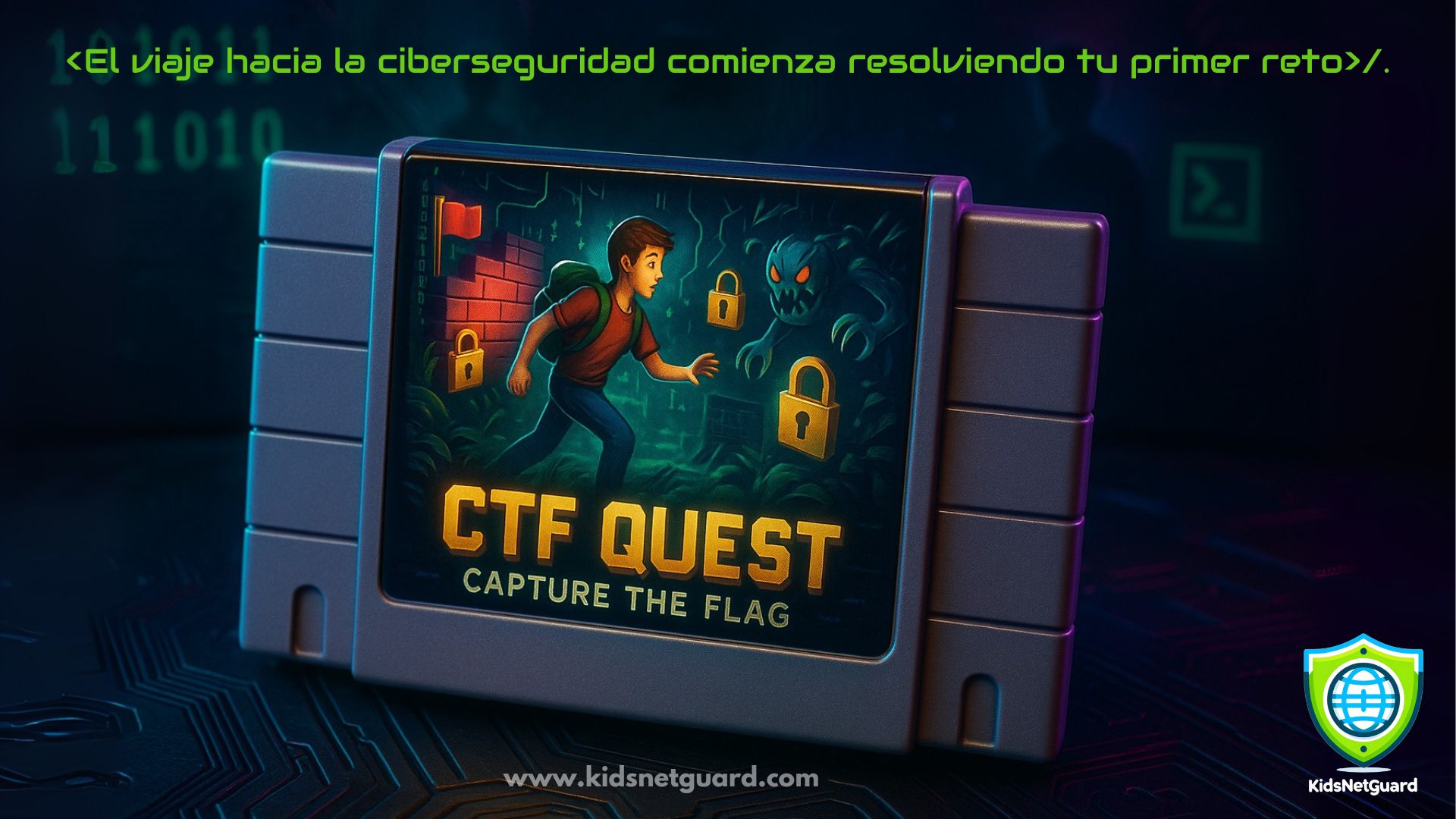
Can you imagine learning ethical hacking as if it were a video game? Capture The Flag (CTF) competitions make it possible. Through real, gamified challenges with flags hidden in vulnerable services, young cybersecurity enthusiasts can apply theory, experiment with tools, and refine attack and defense methodologies in controlled environments.
Beyond the technical aspect, CTFs build soft skills, generate valuable performance metrics, promote ethical principles, and shape new trends in education, training, and recruitment within the sector. In this article, we explore a technical path—from beginner to advanced levels—as well as the role of teamwork, mentors, organizations, and governments. We also include practical recommendations to maintain motivation and consolidate learning.
The technical path: Phases of a progressive journey
It all begins with mastering Linux operating systems and networking fundamentals. Platforms like TryHackMe introduce new participants to basic commands, file structures, and the TCP/IP model. Once foundational knowledge is established, basic cryptography takes center stage on platforms like Cryptopals or PicoCTF, where participants decrypt messages and understand classic algorithms.
The next level includes vulnerable web environments such as OWASP Juice Shop and Hack The Box challenges. These explore SQL injections, XSS attacks, and session management using tools like Burp Suite. Later, digital forensics enables the analysis of disk images and memory dumps using tools like Autopsy and Volatility, reconstructing events from digital artifacts.
Reverse engineering introduces the analysis of executables using Ghidra or IDA Free, supported by debuggers like GDB and libraries such as Pwntools. Finally, IoT and hardware challenges expand the scope, using additional tools to extract firmware and communicate with physical devices.
Each phase of this journey combines three elements: technical documentation (manuals, blogs, RFCs), guided practice (labs, walkthroughs), and self-assessment (flag submissions and detailed write-ups). In this way, learning is not only absorbed—it is experienced.
Key tools in action
Each type of CTF challenge requires specific tools. For network reconnaissance, Nmap and Gobuster allow scanning ports and discovering hidden paths, while Wireshark is essential for capturing and analyzing real-time traffic.
In cryptographic challenges, Hashcat and John the Ripper are key for cracking hashes, complemented by Python libraries such as PyCryptodome for custom attacks. In the web domain, Burp Suite and OWASP ZAP enable traffic interception and manipulation, vulnerability detection, and payload testing.
When it comes to service exploitation, the Metasploit Framework offers ready-to-use modules, configurable payloads, and post-exploitation tools. For forensic analysis, Autopsy and Sleuth Kit allow disk inspection, while Volatility analyzes RAM memory to extract hidden processes and connections.
In reverse engineering, Ghidra and IDA Free reveal the internal structure of binaries, while GDB together with Pwntools allows testing, debugging, and automating exploits. For advanced cryptography, SageMath functions as a mathematical lab, while rsatool facilitates interaction with real RSA keys. In IoT, Binwalk and Firmware-Mod-Kit handle firmware, while OpenOCD and Minicom allow inspection of physical hardware.
Beyond the technical: Metrics and soft skills
A successful CTF team not only collects flags—it also measures its performance. Metrics such as average time to solve challenges, diversity of tools used, and the quality of write-ups are essential. Maintaining a collaborative repository helps consolidate learning and share best practices.
Additionally, CTFs strengthen soft skills such as effective communication, time management, leadership, and resilience. A strong coordinator is key to assigning roles, monitoring progress, and keeping the team focused. Each solved challenge not only strengthens technical knowledge but also reinforces the ability to work under pressure and adapt to the unexpected.
Ethics and responsibility
In CTFs, you act as an attacker—but within a safe and ethical environment. Never test techniques on real systems without authorization. If you discover vulnerabilities outside a controlled environment, practice responsible disclosure: inform the administrator before sharing it publicly. It is also essential to respect the community: give credit in write-ups and avoid sharing solutions without context.
From academia to the job market
Integrating CTFs into educational programs transforms the learning experience. Schools and universities can organize mini-CTFs, assign credits for solved challenges, or promote student clubs with weekly sessions. Partnerships with cybersecurity companies further strengthen the process by offering labs, scholarships, and mentorship opportunities.
From a professional perspective, participation in CTFs opens doors to certifications such as OSCP or eJPT. Maintaining a portfolio with write-ups, scripts, and contributions to open-source projects like Volatility or Pwntools positions young talent as highly attractive candidates. Sharing progress on platforms like LinkedIn expands networks and strengthens personal branding.
Emerging trends
The future of CTFs is already underway. Global collaborative competitions connect teams in real time from different parts of the world. Augmented and virtual reality introduce immersive dynamics. Artificial intelligence enters the scene with bots that compete or assist in solving challenges. Defensive CTFs or Blue Team competitions promote detection and incident response skills, anticipating real market needs.
Conclusion
CTFs are much more than technical exercises: they are spaces for holistic learning, talent incubators, and environments where passion, knowledge, and ethics converge. From the first line of code to the development of complex exploits, each challenge is an opportunity to learn, collaborate, and grow.
We invite you to design your first CTF learning path, build a team, practice regularly, measure your progress, and share your experience with the world. Become part of the global community shaping the next generation of cybersecurity experts. The ultimate challenge awaits behind the next flag!