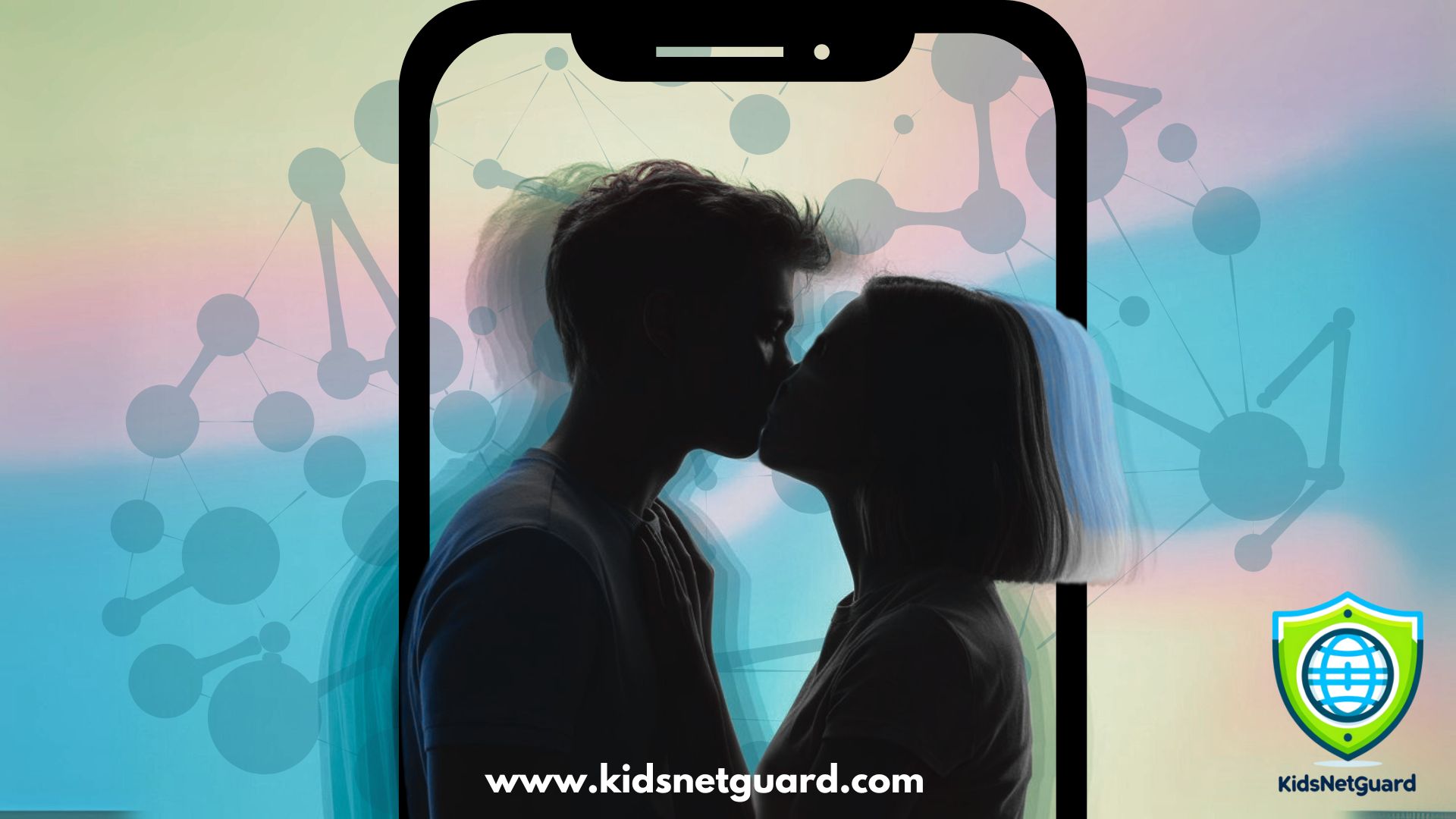
Imagine opening your social media one day and finding a photo of yourself kissing someone… but you were never there, never took that photo, and had no idea that image even existed.
This is not science fiction. Today, anyone—with just two photos—can generate a fake image or video showing you kissing another person. These apps are everywhere, marketed as “fun,” “romantic,” or “creative.” Some even let you choose the type of kiss: on the cheek, on the lips, with hugs, or with more intimate gestures.
And the worst part is—we’re starting to normalize it.
From harmless fun to loss of control
It all started with seemingly harmless edits. People creating fake images with celebrities, influencers, or movie characters. A cheek kiss with your favorite singer, a romantic scene with a celebrity—it all seemed playful.
But things have escalated. These apps now include more intense kisses, physical closeness, intimate gestures, and romantic scenarios that border on the sexual. And while it may sound exaggerated, this is happening every day—alarmingly, even among teenagers.
With just a few clicks, anyone can upload a photo of someone—a classmate, a public figure, an ex, or even a known adult—and generate a kiss that never happened. An image that can be shared, go viral, and be used to mock, harass, or manipulate.
What about adult versions?
This is where things become even more serious. There are apps that allow the creation of sexual deepfakes—explicit content using someone else’s face. Even though they are labeled “for adults,” they lack real safeguards and are accessible to minors with a digital card or shared access.
At a very low cost—or even free during trial periods—anyone can create completely fake intimate scenes that look real. And that can destroy someone’s life.
The psychological impact of artificial affection: fantasy or emotional manipulation?
A kiss, as a symbol of affection and intimacy, carries deep emotional meaning. During adolescence—when emotions are still developing—seeing oneself (or others) in a fabricated emotional scenario can:
- Reinforce unreciprocated romantic fantasies.
- Cause insecurity or public humiliation if shared without consent.
- Normalize the manipulation of someone’s image as a way to “gain” attention or affection.
Someone might say, “It’s just an image—it didn’t really happen.” But that doesn’t make it harmless.
A fake kiss can humiliate. An invented gesture of affection can damage someone’s reputation. And for the person whose image is used without their knowledge, the emotional impact can be deep: insecurity, shame, fear, anger.
Additionally, seeing fake images of oneself or others in intimate or romantic situations can shape how we understand relationships, affection, and intimacy. During adolescence—a critical stage of emotional development—this can blur the line between what is real and what is desired.
Without realizing it, we are teaching that someone’s image can be used for emotional convenience—without limits, without consent.
How does this technology work?
Behind these apps is artificial intelligence that combines images using facial recognition algorithms, neural networks, and face-swapping techniques. In simple terms, they take your face and place it seamlessly onto another image or body, including lighting, expressions, and movement.
You don’t need to be a hacker. You don’t need technical knowledge. Just an app and two photos.
Who should be concerned?
Everyone.
- Parents, because their children could be victims—or even creators—without understanding the harm.
- Educators, because this is happening inside and outside the classroom, affecting relationships and self-esteem.
- Technology companies, because they are designing and promoting tools that enable—and sometimes encourage—unethical uses of AI.
- Social platforms, because they allow this content to spread without clear filters or consequences.
What can we do?
This is not about fearing technology. It’s about setting ethical boundaries, teaching digital respect, and protecting what matters most: people’s dignity.
Talk to your children about these issues. Don’t wait until an image appears to react. In schools, create spaces to discuss consent, digital rights, and image manipulation. To platforms: stop marketing these apps as “games.” They are tools that can destroy someone’s privacy. And to companies: innovation without ethics is not progress—it is irresponsibility.
We cannot continue accepting that a person’s image can be used without permission simply because “technology allows it.” Respect does not disappear in the digital world. A kiss—even a fake one—should never be treated as a joke or an emotional experiment. Personal image is a right, and protecting it is everyone’s responsibility.