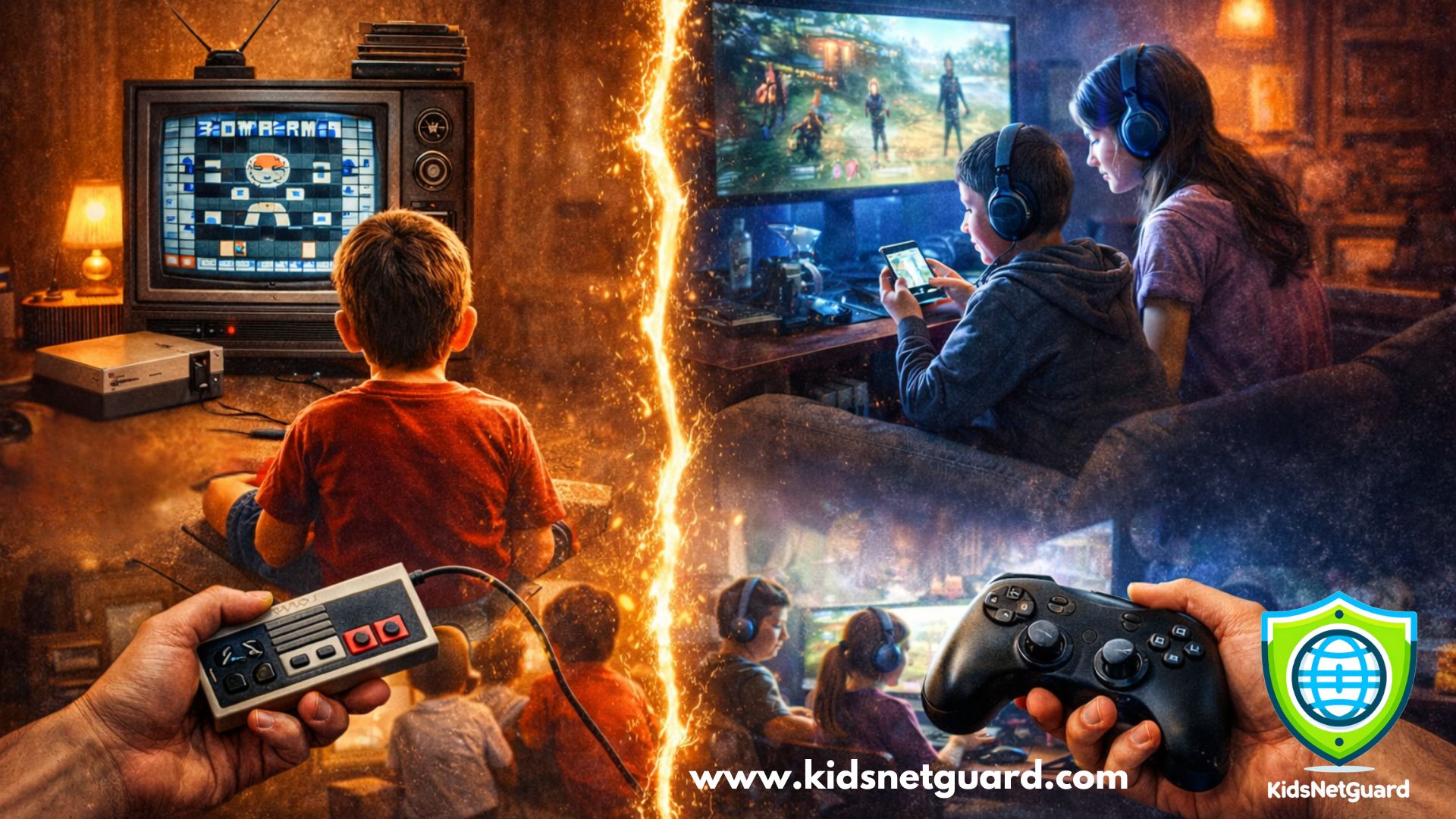
There was a moment—perhaps you remember it vividly—when turning on a video game was almost a ritual. Blowing on the cartridge, inserting the game, turning on a small TV (often black and white), adjusting that converter connected to the antenna so that, on the legendary channel 3, the Nintendo signal would finally appear… and holding a controller that demanded more than reflexes: it demanded total presence. There was always the warning from an adult convinced that the device could “damage the TV,” as if the magic of gaming was always on the verge of breaking something more than the silence of the home.
That feeling returned unexpectedly one recent night. A Christmas gift: a modern, tiny console, with HDMI output, wireless controllers, and connected to a mini projector. It only took selecting a classic title—Bomberman—for time to fold in on itself. The technology had completely changed. The experience, surprisingly, not so much… or perhaps it had.
That moment raises an inevitable question: what really changed between the video games of yesterday and today, and what does that mean for our children?
When playing required total focus
Consoles from a very different era—Nintendo, Atari, Super Nintendo—shared one essential trait: mistakes were unforgiving.
There were no auto-save points, instant rewards, shortcuts, or purchasable alternative paths. A second of distraction, the smallest mistake, was enough to lose everything and start over. Literally. And still, we tried again.
Over time, we learned without realizing it. We learned to observe patterns, anticipate movements, tolerate frustration, and understand that starting from scratch was not punishment—it was part of the process. Progress wasn’t bought; it was earned.
Every achievement was the result of time, strategy, and patience. The reward was not immediate, but when it came, it was profound. It didn’t arrive as extra points or artificial upgrades, but as a quiet certainty: I know how to do this now. That feeling was dopamine, yes—but dopamine built through effort, memory, and patience.
The body learned too. Fingers memorized sequences. Even today, decades later, many still recall those mechanical movements when holding a controller. That muscle memory was no accident—it was sustained cognitive training.
Playing together, in the same place
Multiplayer didn’t require servers or headsets. It was called the living room, bedroom, or dining room. Gaming partners were siblings, cousins, neighbors, or close friends. They shared the same space, the same screen, and above all, the same time. While one played, others watched, learned, and waited their turn. It wasn’t impatience—it was part of the game.
Invisible rules were built there. We learned to win without humiliating and to lose without disappearing. The opponent had a face, a name, and a relationship. Anonymity didn’t exist—and with it, neither did many of the behaviors we now normalize in digital environments.
Losing didn’t mean anonymous insults. Winning didn’t grant digital status. It was just… playing.
The fragmented game of hyperconnectivity
Today, the landscape is radically different.
Children and teenagers play connected to everything and everyone. While progressing through a game, they chat, reply to messages, handle notifications, consume social media, and switch between screens. Gaming no longer demands exclusivity—it competes for attention in an ecosystem saturated with stimuli.
Many modern titles are designed around instant reward systems. Progress can be accelerated through payment, frustrations are softened, and mistakes rarely mean starting over. The challenge hasn’t disappeared—but it has been redefined.
This isn’t about saying “things were better before.” It’s about recognizing that the cognitive experience is different. Sustained focus, patience to repeat the same level over and over, and tolerance for prolonged failure are no longer essential conditions for progress.
What we gained… and what we left behind
It would be unfair to look at the past with selective nostalgia without acknowledging what the present brings.
Modern video games offer visually complex worlds, deep narratives, large-scale collaborative play, and new forms of digital socialization. They develop mental agility, network coordination, and communication skills that didn’t exist before.
But in that progress, some experiences have faded. The value of failure as a teacher, waiting as part of the process, and the satisfaction that comes from gradual mastery without shortcuts have, in many cases, been lost. Gaming is no longer just a challenge—it has also become a market, a social platform, and a reward system designed to retain users.
Cybersecurity and privacy: a more complex playing field
The technological shift didn’t just transform gameplay—it also transformed risk. Before, the greatest risk was losing the game. Today, the risk is more subtle.
The modern video game is also a social environment, a communication channel, and a constant source of data. Open chats, active microphones, persistent profiles, in-game economies, and behavioral data collection are part of everyday life.
Our children don’t just play—they live within complex digital ecosystems, where identity is built, exposed, and sometimes compromised without them being fully aware.
Changing skills, evolving learning
Retro games trained strategy, memory, resilience, and the ability to start over without guarantees. Modern games enhance speed, multitasking, network coordination, and digital communication.
The question is not which is better, but which skills we are no longer exercising—and which we need to consciously strengthen to balance the experience.
Perhaps the greatest lesson is not in comparing generations, but in understanding them.
Our children are not living an “inferior” version of gaming. They are living a different digital culture, with different codes, rhythms, and risks. The memory of holding a controller from an 8- or 16-bit console is not just nostalgia—it is a memory of a relationship with technology that shaped us.
That memory can become a bridge. Not to impose, but to dialogue. Not to forbid, but to accompany. Not to disconnect them from the world, but to help them navigate it with greater awareness and safety.
That night, in front of a modern projector and a game from another era, it became clear that technology changes—but the human experience continues to seek the same things: challenge, meaning, achievement, and connection.
Perhaps it’s not about going back, nor resisting the present, but about rescuing the best of both worlds.
Because between the cartridge and the algorithm, between the black-and-white TV and online gaming, there is a unique opportunity: to guide our children so they not only play better, but live their digital world better.